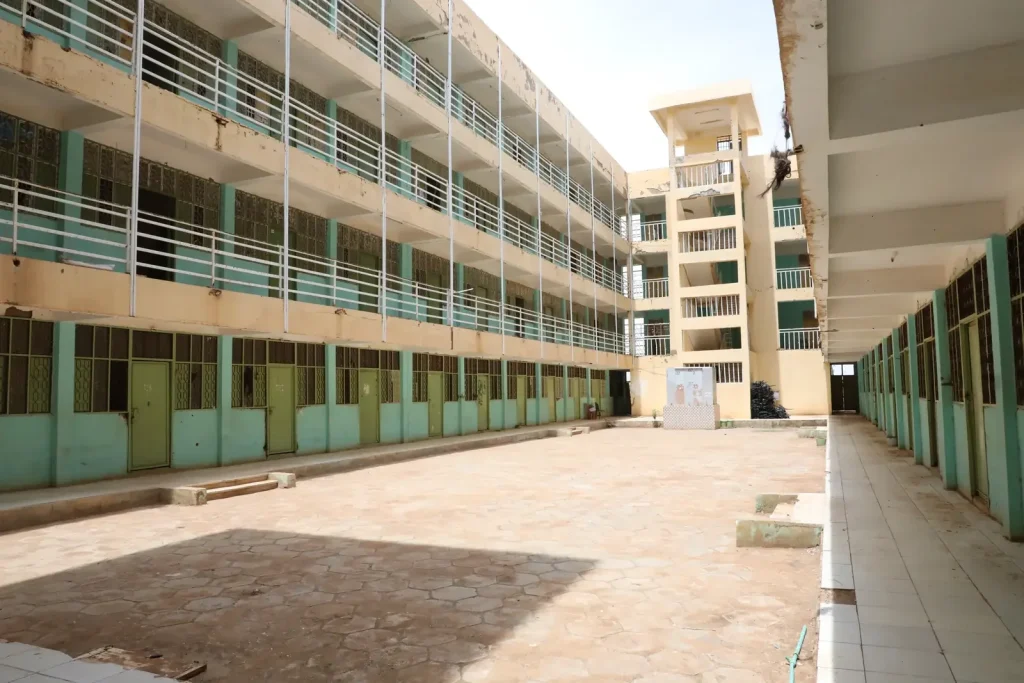
Rebuilding the university cities and halls
From destruction to reconstruction
We are returning them to service, city by city. Student halls and university cities were destroyed and looted across Khartoum, Gezira, Sennar, Kordofan and Darfur. The Fund formed a high committee for reconstruction, which in turn formed technical committees at the centre and in the states to survey the damage, cost it, and prepare a plan with priorities and a timetable.
What the rebuild needs
Rebuild priorities
The committee set five priorities, carried out in order at each city or hall.
- Rebuilding collapsed boundary walls and barbed wire, and repairing receptions and main gates.
- Electrical work: transformers, cabling, wiring, fans and lighting.
- Plumbing and water: tanks and pumps, well repairs, coolers and bathrooms, and cleaning the septic tanks and sewage stations.
- Metalwork: remaking and refitting the doors and windows that were looted.
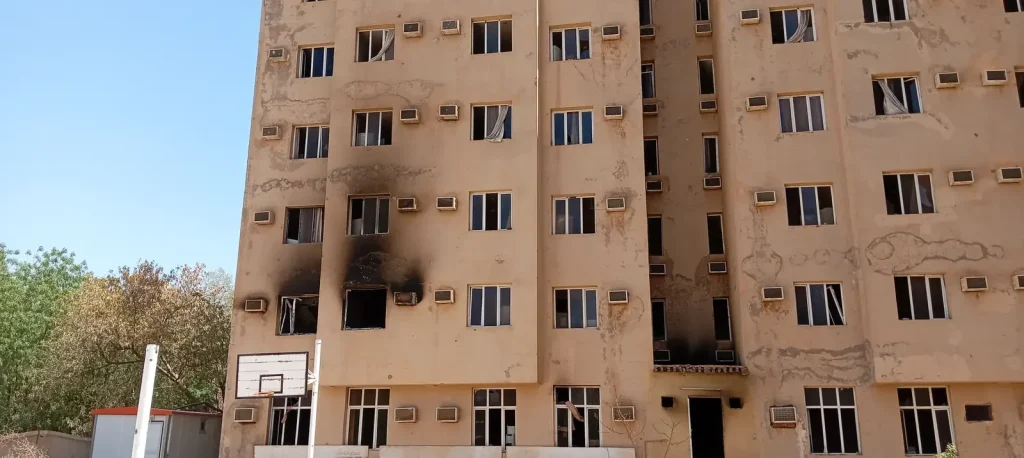
- Rebuilding the blocks that were destroyed or burnt, and repainting.
The damage, state by state
Surveyed on the ground by the technical committees and costed in US dollars
Khartoum
106,712,843 $
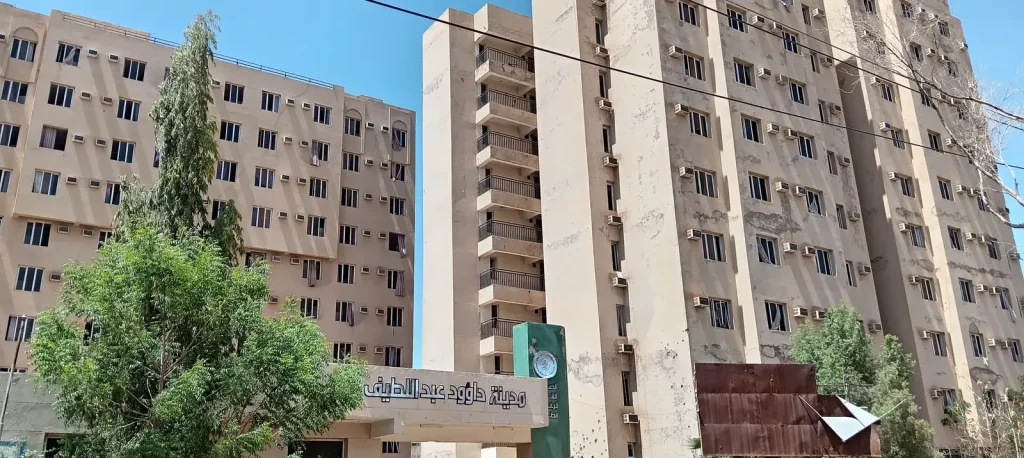
The heaviest damage. Shahid Ali Abdelfattah city for women in Omdurman held around 5,000 students, and Al-Zahraa hall — formerly Al-Barakis — around 5,000. Dawood Abdellatif and Al-Zaeem Al-Azhari were also hit, as was the Secretariat-General itself, which was targeted and stripped of its equipment.
Gezira and Sennar
No separate cost published
Systematic looting. Al-Zahraa city for women in Gezira, and Abu Hijar, Adel Marhoum and Umm Maabad halls in Sennar.
South Kordofan
5,642,219 $
Heavy damage; this is what returning the cities to use would cost.
West Kordofan
3,000,000 $
Looting and destruction around Al-Nuhud, Lagawa and Al-Fula, needing major intervention before these cities return to what they were.
The Darfur states
3,000,000 $
Student cities and halls were very heavily affected and need rehabilitating and rebuilding outright.
North Kordofan
No separate cost published
The cities and halls became shelters for people arriving from the war states, coordinated with the relevant authorities. Sheltering numbers that large left its own damage behind.
The phases
Updated by the Secretariat-General
Phase 1 — Khartoum
CompletedMore than 10 dorms, with capacity for around 9,000 students.
Phase 2 — Khartoum
Opened 29 July 2026Seven housing complexes with capacity for around 5,000 students.
Phase 3 — starting from Wad Madani
In progressLaunched on 5 October 2026, targeting 101,000 beneficiaries, and expected to be completed in early 2027.
What is being rehabilitated
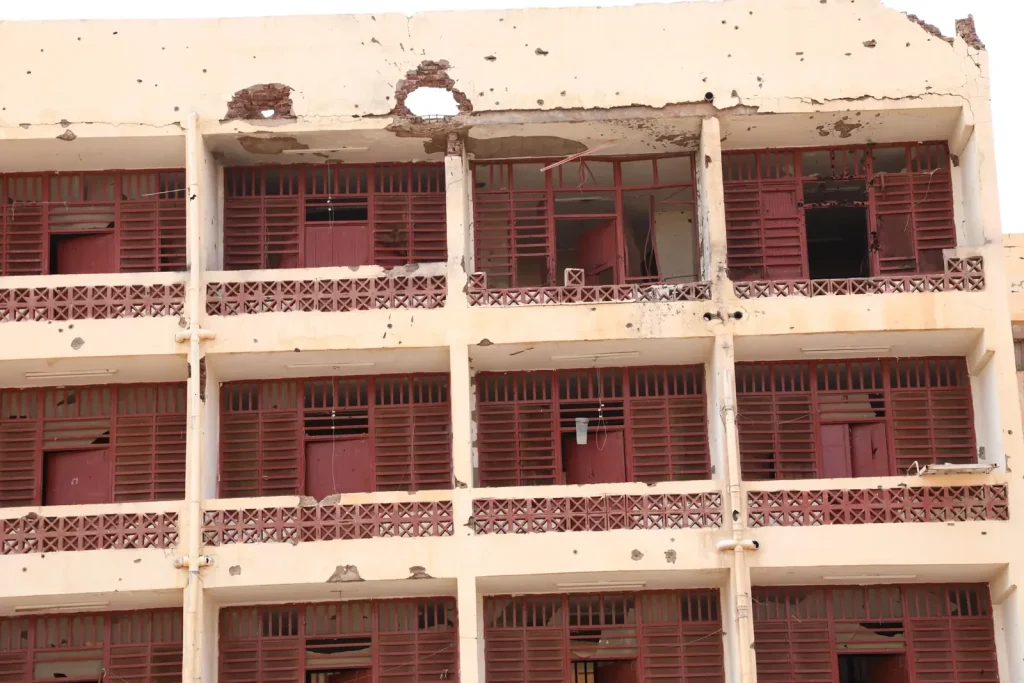
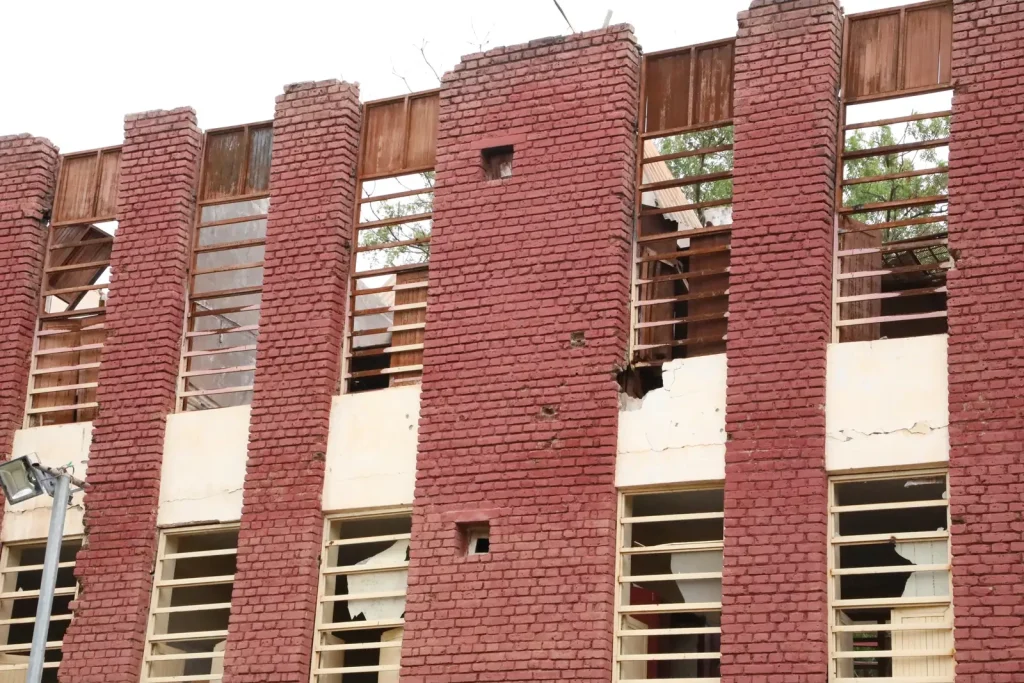
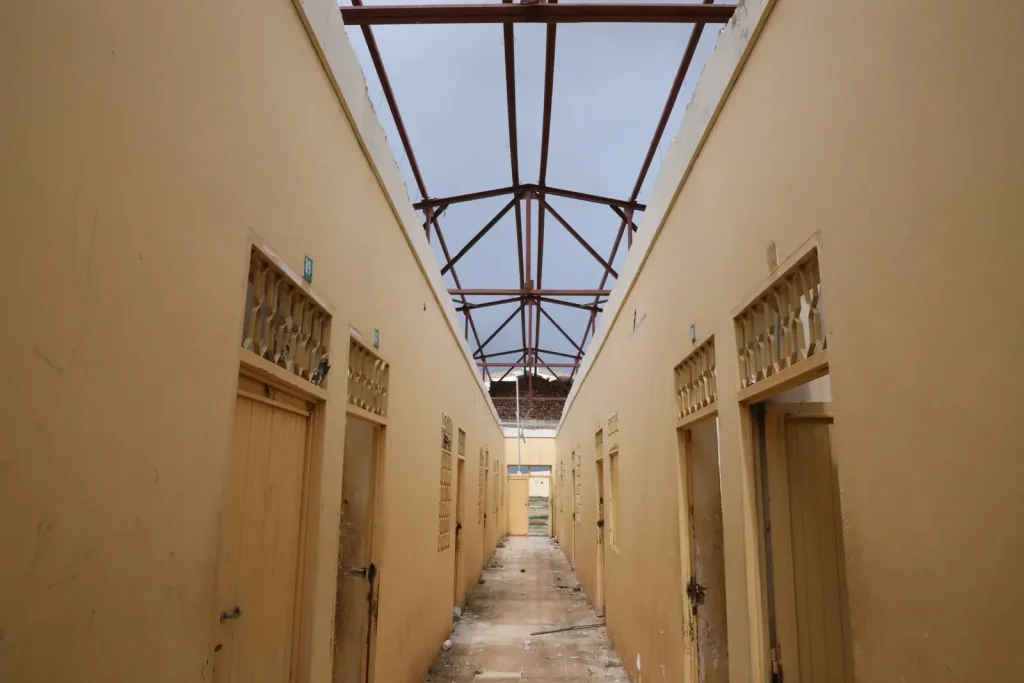
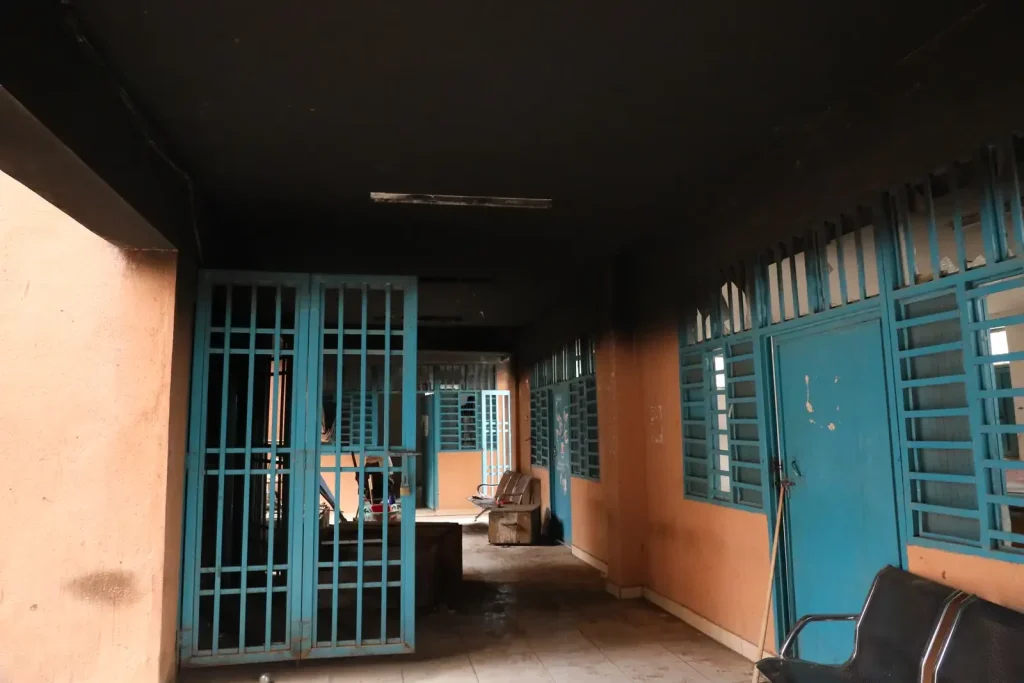
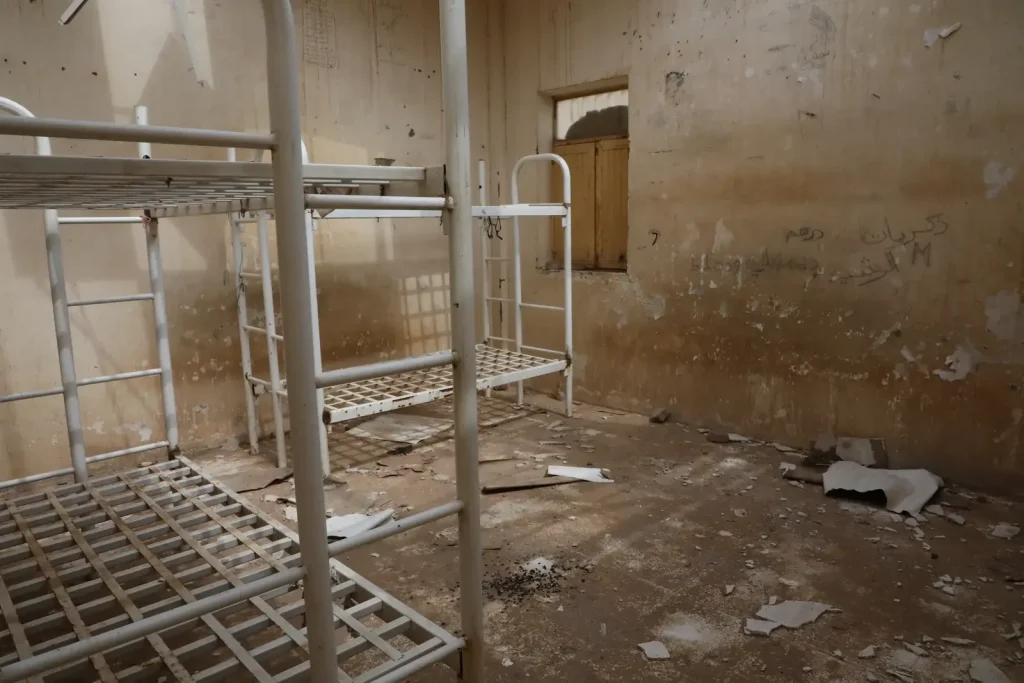
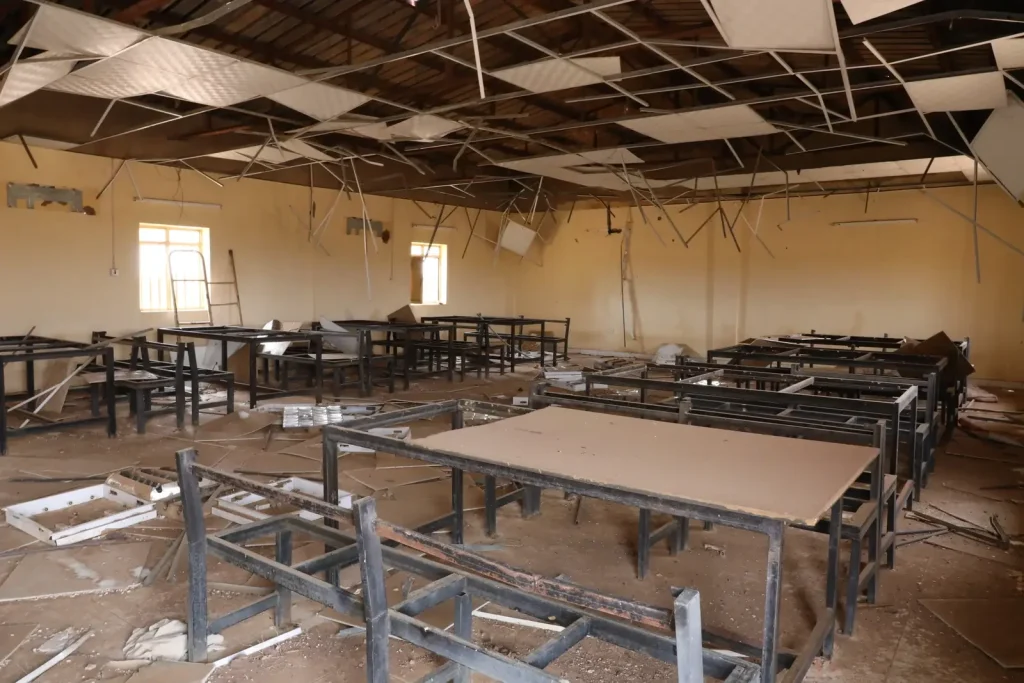
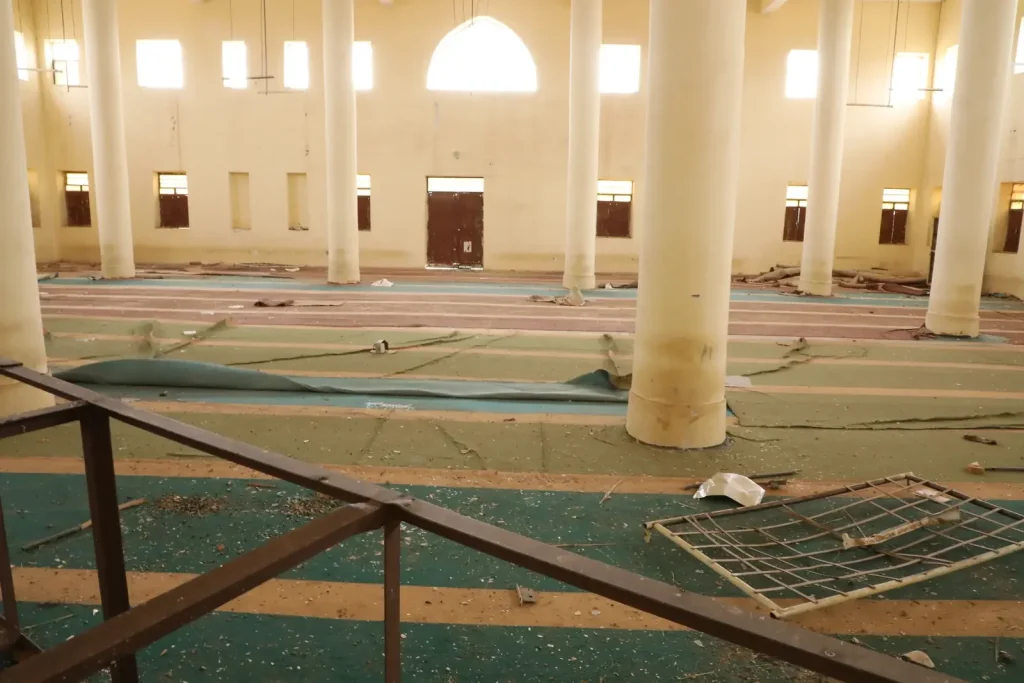
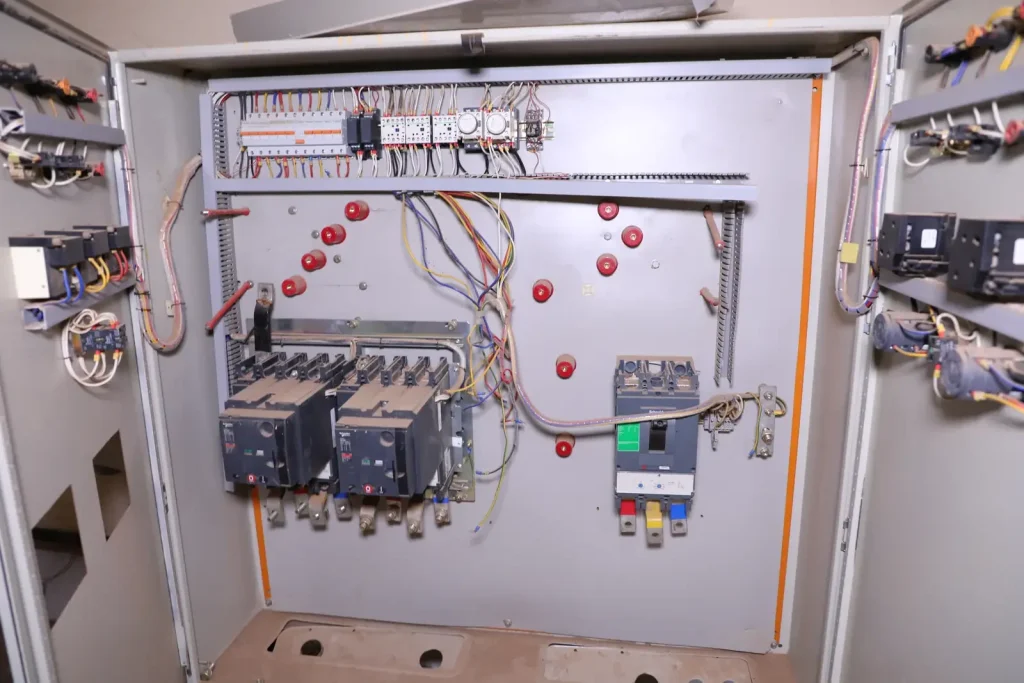
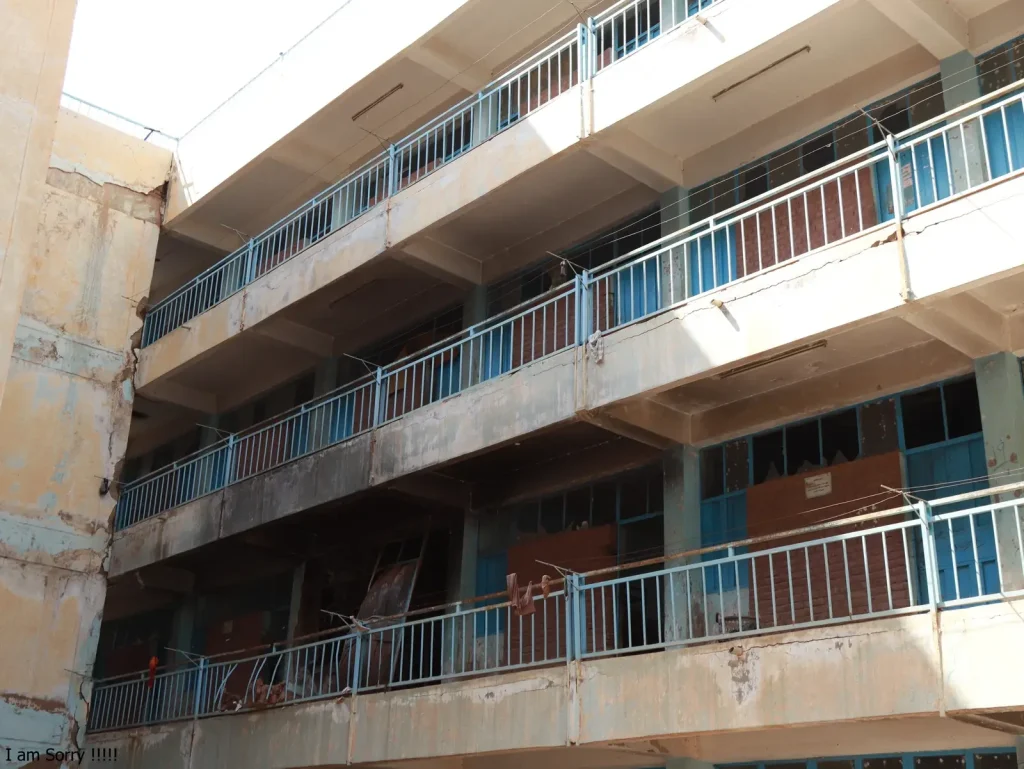
Photographs of the complexes before rehabilitation
The damage is not only to façades: electrical panels were stripped of their components, water networks were put out of service, and rooms and dining halls were emptied of their furniture.
The challenges
Rebuilding is not construction alone. These are the challenges the Fund is working to address.
- Rebuilding the halls of residence, at an estimated 183.5 million US dollars.
- A housing gap of 40,173 students.
- Ambulances lost to the war, and the wear on those left (47 vehicles).
- Developing and growing the Fund’s resources.
- Raising the quality of student services.
- Addressing the psychological and social effects on students and staff.
- Low staff wages.
What this means for you
Complexes that have returned to service appear in the complex directory with their status: registration open, running, or under rehabilitation. Check a complex’s status before travelling to it — the status changes during the season.